
About


What is Irregular Art Schools?

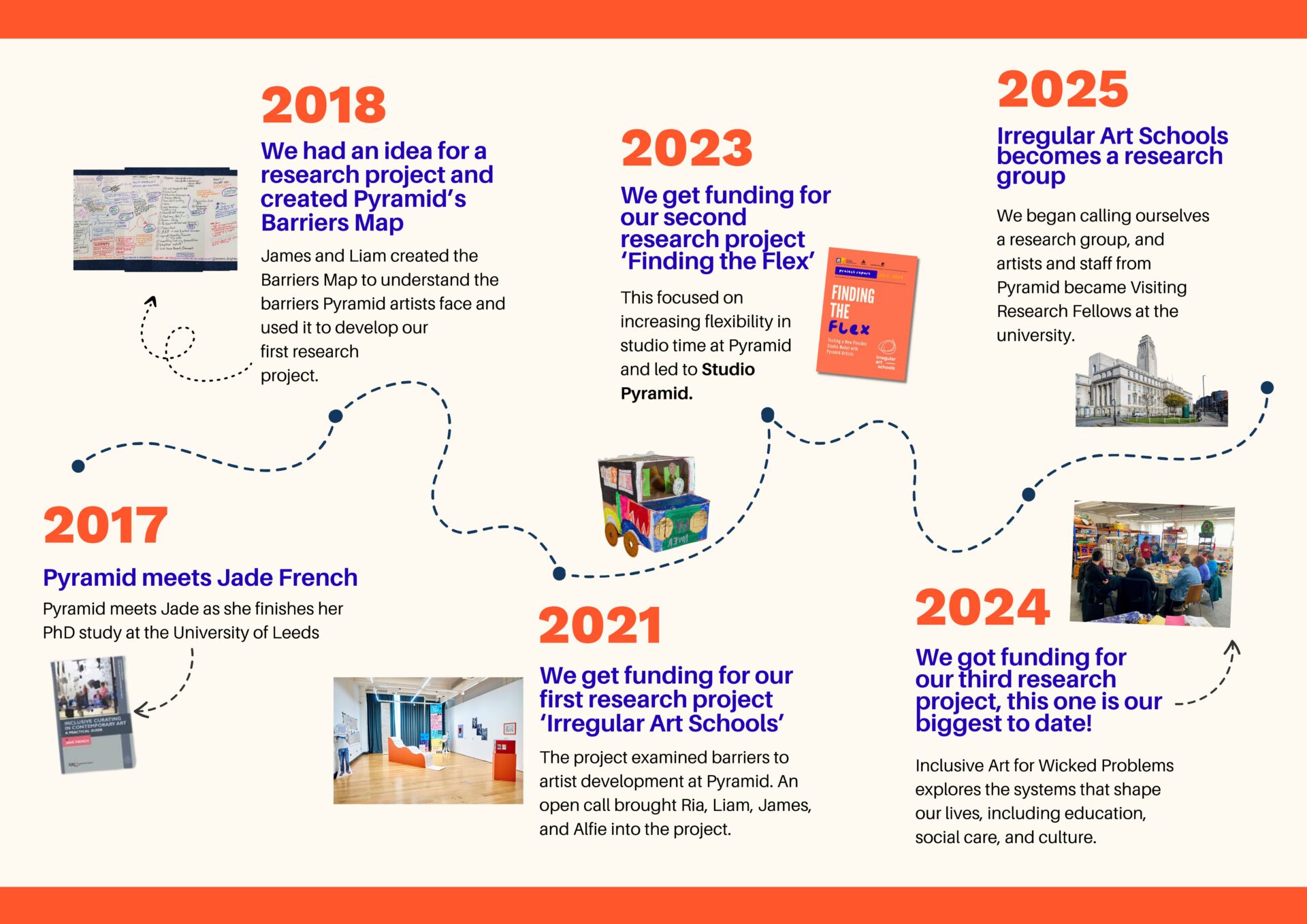
Irregular Art Schools is an inclusive arts research group. It is made up of people with and without learning disabilities and autism from different organisations like Pyramid, University of Leeds, and University of York. We have all come together through our love of art and our desire to better understand and action change.

What is action research?

Doing action research means we are working together to think about problems to make change happen. We try things out in real life and then look back on what we did to think about what we learnt. 


About our current project

We are currently working on a 4-year project called Inclusive Art for Wicked Problems funded by UKRI. This is a systemic action research project exploring inclusive arts practice as an approach to generating systems change. This includes:


• Training Irregular Art School members in Systemic Action Research (SAR) using inclusive arts approaches.

• Developing our approach internationally and cross-culturally through a partnership with collaborators in São Paulo (Brazil) by setting up an inclusive arts studio with the São Paulo Museum of Modern Art.

• Activating the wider ‘system’ by creating a broader network of learning disability communities across the Leeds City Region participating in the SAR inquiries led by artists.

• Connecting the range of inquiries generated through SAR together, and then to national and international debates and formal decision makers, to create sustainable
change.


About our previous project

Our first research project ‘Irregular Art Schools’ ran between February 2021 to July 2023. We created lots of art, ran many workshops, visited new places, and met new people to think about ways to develop as an artist. This included:

• Collaborating with Assembly House to experience a different kind of studio and test out peer learning approaches.

• Collaborating with the School of Fine Art, History of Art & Cultural Studies at the University of Leeds to learn about studying art

• Running two national workshops on artist-facilitation.

• Experimenting with inclusive peer review

• Working with social workers and social care commissioners to see how art and social policy can better connected


What have we learnt?

• How to better support inclusive artist development for learning disabled people.

• Unsettling what it means to be ‘professional’ in the first place.

• How to support inclusive collaborations between different individuals, organisations, and sectors.

• How to connect different people and sectors in the region so we can advocate for the things all artists need to flourish.

• How to share what we have learnt in inclusive ways.


Read and download the final report

Explore our research